Creatine: what the science actually says
Loading, dosage, safety, water: we answer the most common questions using the evidence, not myths.
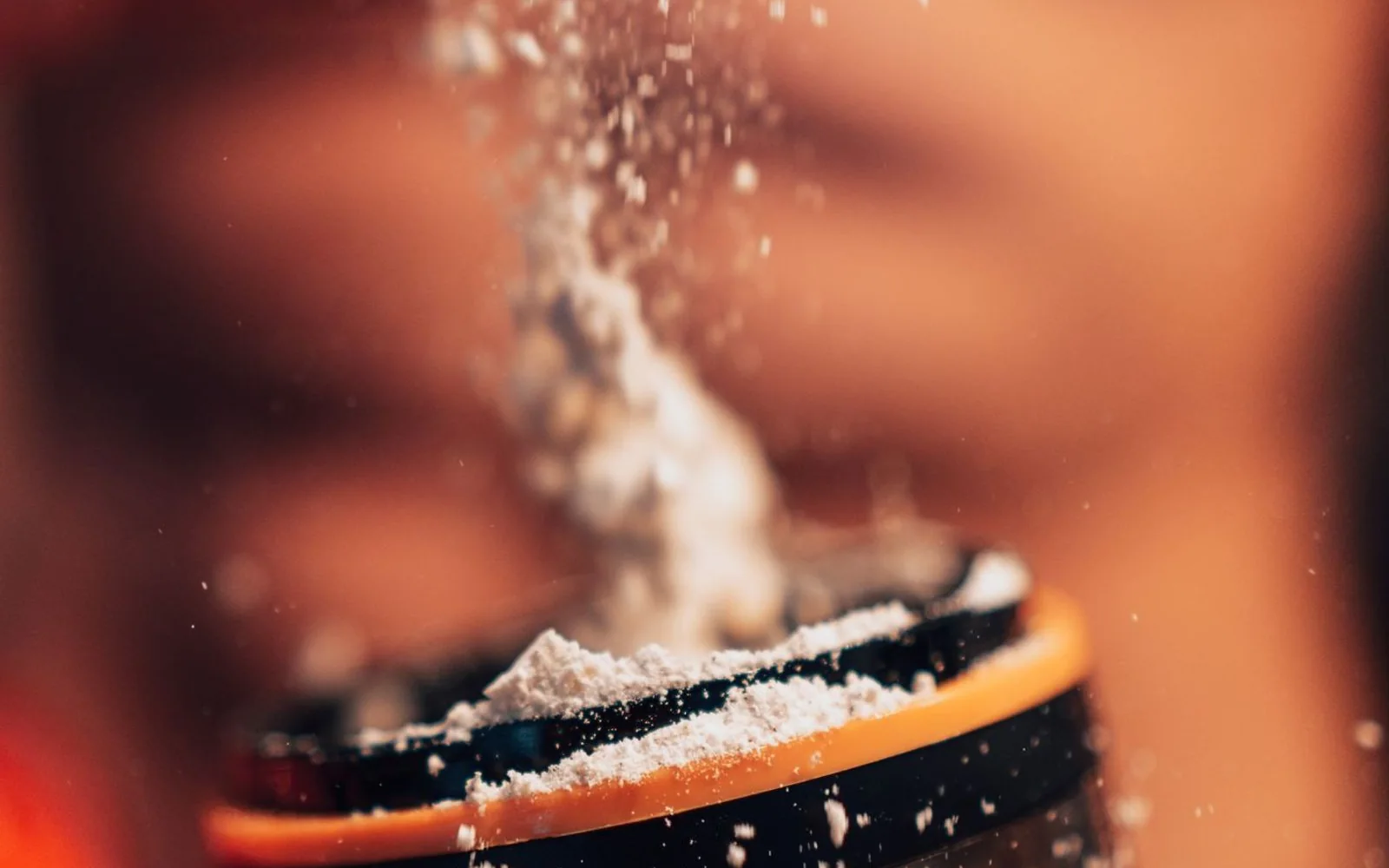
Creatine monohydrate is one of the most studied and safest supplements available. 3–5 grams a day, taken consistently, improves strength and performance in explosive efforts. No 'loading phase' or cycling off is required.
What creatine is
Creatine is a substance your body produces naturally and that's also found in foods like meat and fish. It's stored mainly in muscle, where it helps rapidly replenish energy for short, explosive efforts: a sprint, a lift, the last hard seconds of a set.
Does it actually help?
Yes. It's one of the few supplements with strong, repeated evidence behind it. Combined with resistance training, it supports:
- Greater strength and more reps at high intensity.
- Better muscle mass gains through higher-quality training.
- Faster recovery between explosive efforts.
How much, and when?
The effective dose is 3–5 grams of creatine monohydrate per day. Timing doesn't play a major role. What matters is taking it daily and consistently, so your muscle stores stay "topped up". You can take it with water, juice, or in your shake.
"The secret to creatine isn't the day's dose, it's the consistency of the weeks."
Do you need a loading phase?
A loading phase (e.g. 20 g/day for 5–7 days) simply fills your stores faster. It isn't necessary: with 3–5 g a day you reach the same point within 3–4 weeks, with a lower chance of stomach discomfort.
What about the water?
Creatine draws water into the muscle cell, which is why you often see a small weight increase in the first few days. That's normal, and it isn't fat. Just make sure you're drinking enough fluids throughout the day.
Is it safe?
For healthy adults, long-term use of creatine monohydrate is considered safe in the literature. If you have any kidney condition or other medical concern, discuss it with your doctor or dietitian first.



Every case is different. We can look at your needs together.